The Real Odds: What iGaming Gets Right (and Wrong)
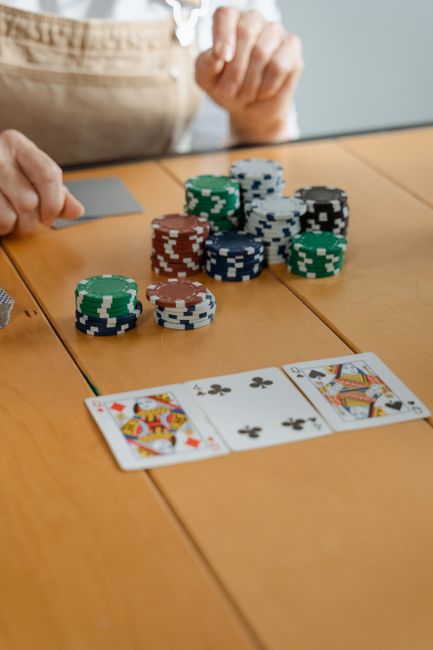
Ask ten people what they think about online casinos and you'll get ten different answers. Some will tell you about the $12 they turned into $400 on a single slot spin. Others will tell you about the $400 they turned into $12. Both stories are true, and both miss the point. The iGaming world isn't a get-rich-quick machine or a rigged trap — it's a massive, regulated entertainment industry with its own logic, math, and culture. If you're going to spend time and money in it, you owe it to yourself to understand how it actually works.
Every game in a casino — online or brick-and-mortar — is built on a house edge. That's not a secret. It's published in the fine print of the game rules, and regulators require it to be disclosed. The house edge is the mathematical advantage the operator holds over the player on every bet, and it varies wildly by game.
What does that mean in practice? If you sit at a blackjack table with $500 and play perfect basic strategy, your expected loss over a long session is around $2.50 per $500 wagered. If you play the same $500 through a low-volatility slot with a 6% edge, you're losing about $30 per $500 cycled through. Over hundreds of spins, that gap compounds. Skill-based games reward the patient and the disciplined. Pure-chance games reward the operator. Knowing which side of that line you're on matters more than any hot-streak story you've ever heard.
Slots are the engine of online casinos — they generate the majority of revenue across almost every market. That's not an accident. Modern slot design is a masterclass in behavioral psychology, and understanding it can change how you play.
The near-miss effect is the classic example. When a reel stops one symbol short of a jackpot, your brain lights up in roughly the same way it would on an actual win. Studios absolutely lean into this. Bonus rounds, free-spin triggers, and cascading reels all exist to extend time-on-device, which is the metric every operator tracks most closely.
Poker is the outlier in iGaming. It's the one game where long-term win rate is determined almost entirely by skill, not luck. The rake — the small cut the house takes from each pot — means you must be meaningfully better than your table to profit. In soft games, that's very achievable. In hard games, it isn't.
The rise of solvers and GTO (game theory optimal) training has transformed the modern game. Recreational players now face opponents who have studied thousands of hands and know exactly how to exploit common leaks. If you're serious about poker in 2025, here's what actually moves the needle:
Sit-and-go tournaments and micro-stakes cash games remain the best training grounds. High-stakes heads-up, on the other hand, is a brutal niche where even strong players get carved up.
Most sports bettors lose, and it isn't because they pick badly. It's because they bet badly. They load parlays, chase accrued losses, and bet on their favorite teams at inflated prices. The house doesn't need sharper eyes — it needs you to be emotional. It is also worth checking mahjong ways 2 before deciding.
Sustainable betting looks boring. Implied probability, line shopping, and a single flat stake size across all wagers. If a book offers a team at +105 and another offers the same team at +120, that discrepancy is where value lives. On thousands of bets, one or two percent of closing line value is the difference between an account that grows and one that drains.
Live betting complicates things. In-play markets feel exciting because odds swing every few seconds, but a significant portion of recreational live betting is exactly what the operator hopes you'll do at 10 PM on a Saturday. If you tilt when a team fumbles, live betting is not for you.
Reputable iGaming operators carry licenses from jurisdictions like Malta, the UK, Gibraltar, or Curacao. Licensed sites undergo regular audits, submit their RNGs and payout percentages for testing, and are required to offer self-exclusion tools and responsible-gambling resources. Unlicensed offshore sites offer none of that. The withdrawal delays, the games that "just happen" to reject your first big cashout — those stories almost always trace back to unlicensed operators.
Before depositing anywhere, verify the license, check the regulator's public register, and read how long withdrawals actually take. A site that takes crypto deposits in five minutes but sits on withdrawals for two weeks is telling you something about how it treats customers. Bonus terms deserve the same scrutiny. A 40x wagering requirement on a 100% match bonus can cost you more than not taking the bonus at all, thanks to slot cap restrictions and time limits buried in section 12 of the terms.
iGaming is entertainment. Not an investment, not a side hustle, not a way to escape a bad month. The players who get the most out of it — and lose the least — are the ones who treat it like a night out: a defined budget, a defined evening, and no expectation of getting the money back. They learn the rules, pick their games deliberately, and walk away when the fun stops being fun. The house edge always wins eventually, but you choose how much you give it, how long you give it, and what you learn along the way. That's the only real advantage anyone has.